
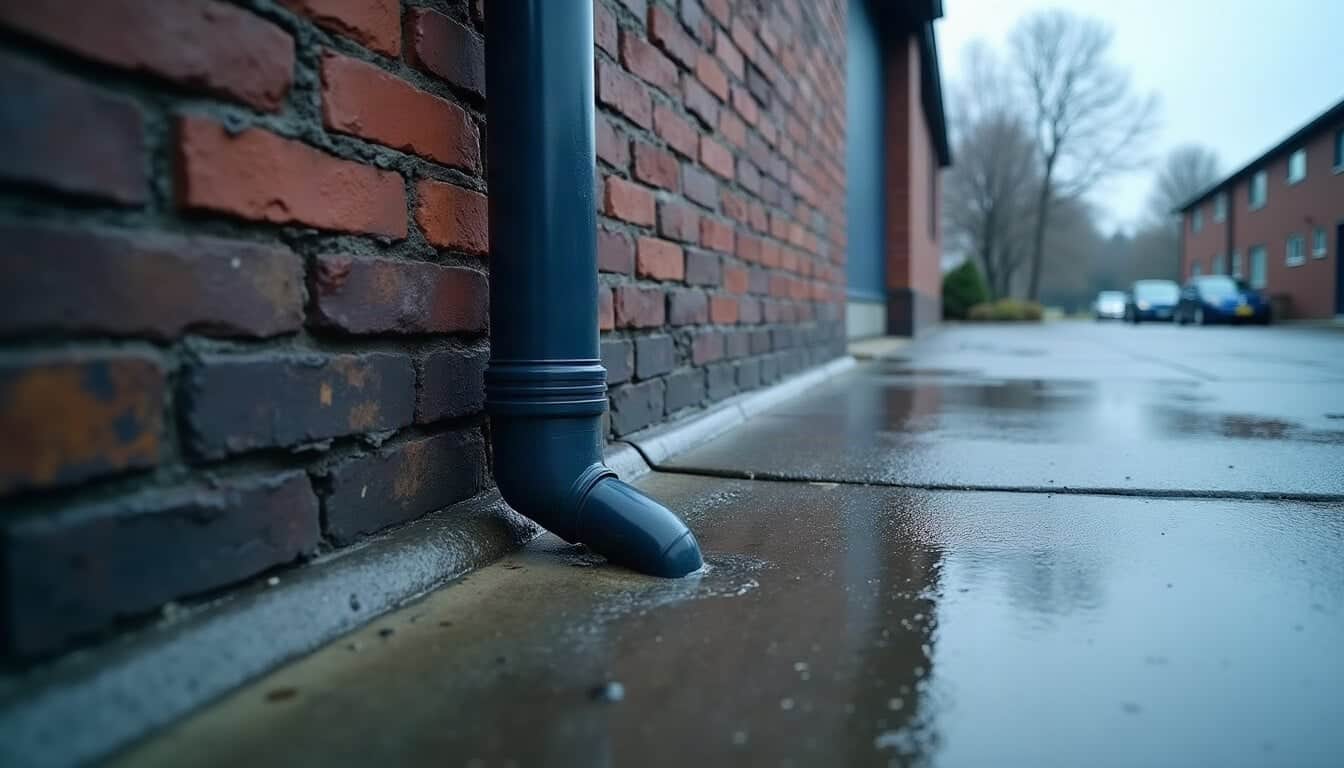
After a week of heavy spring rain, the back door of the shop will not close properly. Then someone notices a new crack running up the block wall in the stockroom, and the delivery driver mentions that the edge of the driveway has dropped where the water ran off. None of it closes the business today. All of it is telling you something about next season.
Storm season brings this kind of slow damage to homes and small businesses alike, and the fix starts with the ground the building sits on. A local firm such as GK General Contractors can assess foundations, masonry and concrete before small problems grow. This insight looks at what a damaged foundation or driveway really costs an operation in time and access, and how to shorten the disruption.
Water at the foundation
Exposure. Heavy rain does most of its damage at ground level. Gutters overflow, downspouts empty against the wall, and the soil beside the building swells and shrinks as it soaks and dries. Over time a foundation can settle or crack, and water starts to find its way in. The early signs are ordinary: a door that sticks, a window that will not latch, a hairline crack that slowly widens, a damp line at the base of an inside wall.
Impact. For a small business, foundation movement shows up first as nuisance and then as closure. Doors that bind can trap a fire exit. Water in a stockroom ruins inventory and records. Repairs that start late tend to be larger, and they can take part of the building out of use while the work is done. At home, the same pattern hits the basement, the crawl space and the garage.
Control. Have a foundation professional look at any crack that is growing, any wall that is wet, or any door that started sticking after a storm. Foundation and structural work is never a do-it-yourself job; the assessment is what tells you whether a crack is cosmetic or a sign of something more. Keep downspouts and grading directing water away from the walls in the meantime.
Test. Mark the ends of any visible crack with a pencil and the date. Check it after the next few heavy rains. If it grows past your marks, call for an assessment instead of waiting for the next season.
The driveway nobody plans around
Exposure. Concrete and asphalt fail at the edges and at low spots. Water undermines the base, a section sinks, and a crack becomes a broken slab. A steep or narrow drive that is fine in dry weather can become hard to use when it is cracked, uneven or washed out at the bottom.
Impact. Access is a dependency most plans forget. If delivery trucks will not risk a broken drive, stock stops arriving. If staff cars bottom out, people park on the street and walk across the wet grass. And in a real emergency, an ambulance or fire truck needs a clear, solid way in. For a household, a failed driveway can strand a car at the worst possible time, or leave an older relative struggling to reach the door.
Control. Repair cracked or sinking driveway sections before they break through, and make sure water has somewhere to go other than under the slab. A contractor who repairs concrete driveways can look at the base, the drainage and the edges together. Ask them to explain what caused the failure, not just how they will patch it. A patch over a washed-out base usually fails again in the same place, often in the same season.
Test. Once a season, walk the drive and parking area after rain. Note standing water, broken edges and any section that sounds or feels hollow. Photograph each one so you can see whether it is getting worse. Keep the photos in the same folder as your building records, so the history is there when you need to show it.
Single point of failure: for many small sites it is the single driveway that every delivery, every staff car and every emergency vehicle has to use. Keep it sound and well drained, because when it fails there is usually no second way in.
Masonry that storms loosen
Exposure. Brick and block walls, steps, chimneys and retaining walls weather slowly and then fail all at once. Mortar washes out, bricks loosen, and a strong storm finishes what years of rain started. Front steps that have shifted can tip underfoot.
Impact. Loose masonry is a safety hazard for anyone walking past, and a damaged entrance step or wall can close a doorway until it is made safe. If the wall in question is holding back soil or supporting part of the building, the stakes are higher.
Control. Have damaged masonry checked by a qualified masonry contractor, and keep people away from any wall or step that has moved. Structural or load-bearing work is for professionals only. Until the repair is done, put a simple barrier around the affected area and route foot traffic another way. If a damaged step is the main entrance, decide in advance which other door customers will use and how you will tell them, so the first visitor of the morning is not the one who finds out.
Test. After any severe storm, walk the outside of the building with a flashlight and look at walls, steps and chimneys from the ground. Do not climb ladders or roofs to look. Note any gap, missing mortar or loose piece and report it.
Rebuilding without starting from scratch
Exposure. After a damaging storm, every property owner in the area needs a contractor at the same time. Businesses without a relationship already in place spend the first days making calls, waiting on callbacks and trying to describe the damage over the phone.
Impact. The delay is the real cost. Every day the building is unsafe or inaccessible is a day of lost trading, and every day water gets in, the repair grows.
Control. Build the relationship before you need it. Put a general contractor's details on the emergency contact list next to the plumber, the electrician and the insurer. Keep recent photos of the building, inside and out, so you can show what changed. Talk to your insurance broker about what records they would want after a loss; that is their area, not ours.
When repairs do start, treat them as a planned disruption rather than something that happens to you. Ask the contractor which parts of the building will be out of use and in what order, and whether the work can be phased so the front of house stays open while the back is repaired. Agree where materials and equipment will sit so they do not block the entrance or the fire exit. Tell staff, regular customers and suppliers what to expect and for how long. A small business that stays partly open through a repair keeps its customers in the habit of coming back.
Test. Pull out the emergency contact list today. Is there a contractor on it? Is the number current? If not, fix it this week.
| When | Household | Small business |
|---|---|---|
| Now | Mark cracks, clear gutters | Photograph the building, add a contractor to the contact list |
| Before storm season | Check drive and steps | Walk access routes and the stockroom wall |
| After every major storm | Walk the outside from the ground | Same walk, plus check doors and fire exits |
Coordinate with your local officials and utilities for anything that touches public roads, drains or downed lines. Their guidance comes first.
What to do this quarter
- Mark and date every visible crack in foundations and walls, and check them after the next heavy rain.
- Walk the driveway and parking area after a storm and photograph each broken or sinking section.
- Put a contractor on your emergency contact list and confirm the number works.
Buildings rarely fail in a single night, but plans that ignore the slow signs usually do.