The call usually comes before sunrise. Somebody opens the shop or the dental office on the first hard morning of winter and finds the building as cold as the parking lot. The furnace ran fine yesterday; today it is silent and the first customers are due in two hours.
Heat is one of those services nobody writes into a continuity plan until it fails. For the equipment itself, start with a qualified technician: local pages for a Castle Rock HVAC contractor usually cover furnace repair, replacement and ductless mini splits, the three things this plan leans on. This piece walks through the heating exposures we see most often in small businesses and homes on the high, dry side of the Front Range, where winter arrives in sudden cold snaps and leaves just as fast. The rest is yours to organize: who notices, who calls, and what you do while the building warms back up.
The furnace that has not been looked at since last spring
Exposure. Most heating failures we hear about start the same way. The system sat idle through a warm autumn, nobody scheduled a check, and the first night of real cold asks it to run hard for hours. A worn part or clogged filter that would have been obvious in October shows up overnight or on a weekend.
Impact. For a household, a cold house is uncomfortable at first and then a real hazard for infants, older relatives and anyone with a health condition. For a small business, staff can't work, a clinic may not be able to see patients, and a food business may have to close. The outage lasts as long as it takes to get a technician out, diagnose the problem and source a part, and in the first cold week of the season everyone is calling at once.
Control. The cheapest control is boring: a professional furnace inspection before the heating season, done when technicians have open schedules and parts are easy to get. A good technician checks the burners, ignition, heat exchanger, venting, blower and safety controls, and tells you plainly whether the unit is sound for another winter or whether it is time to plan a replacement on your own timeline rather than in an emergency.
Test. Before the first cold forecast, run the heat for a full afternoon on a cool day. An hour later, walk the building and note any room that stays cold and any new smell or noise. If anything seems off, call it in while it is still a scheduling question and not an emergency.
The building that depends on one heat source
Exposure. A surprising number of offices, shops and homes run every room from a single furnace. That is normal, but it means one failed component closes the whole building.
Impact. When there is only one source, there is no partial operation. You can't move staff to the warm half of the office, because there is no warm half. In a home, the family ends up gathered in one room with space heaters, which brings its own fire risk if they are used carelessly or plugged into overloaded outlets.
Single point of failure: a building with one furnace and no backup has a continuity plan that ends at the thermostat. A second, independent heat source for the rooms that matter most, such as a ductless mini split in the office core or the server closet, turns a full closure into a partial one.
Control. Ductless mini splits are worth discussing with a contractor here because they heat and cool a zone without relying on the main ductwork. Placed in the rooms you can't afford to lose, they give you somewhere to keep working. A professional will look at the space, the insulation and your existing system and tell you whether a mini split makes sense, and where it would actually help.
Test. On your next walk-through, ask one plain question for every critical room: if the main furnace stopped tonight, where would we work tomorrow? If the answer is "nowhere in this building", write that down. It is the most honest line in your plan.
Readiness kit
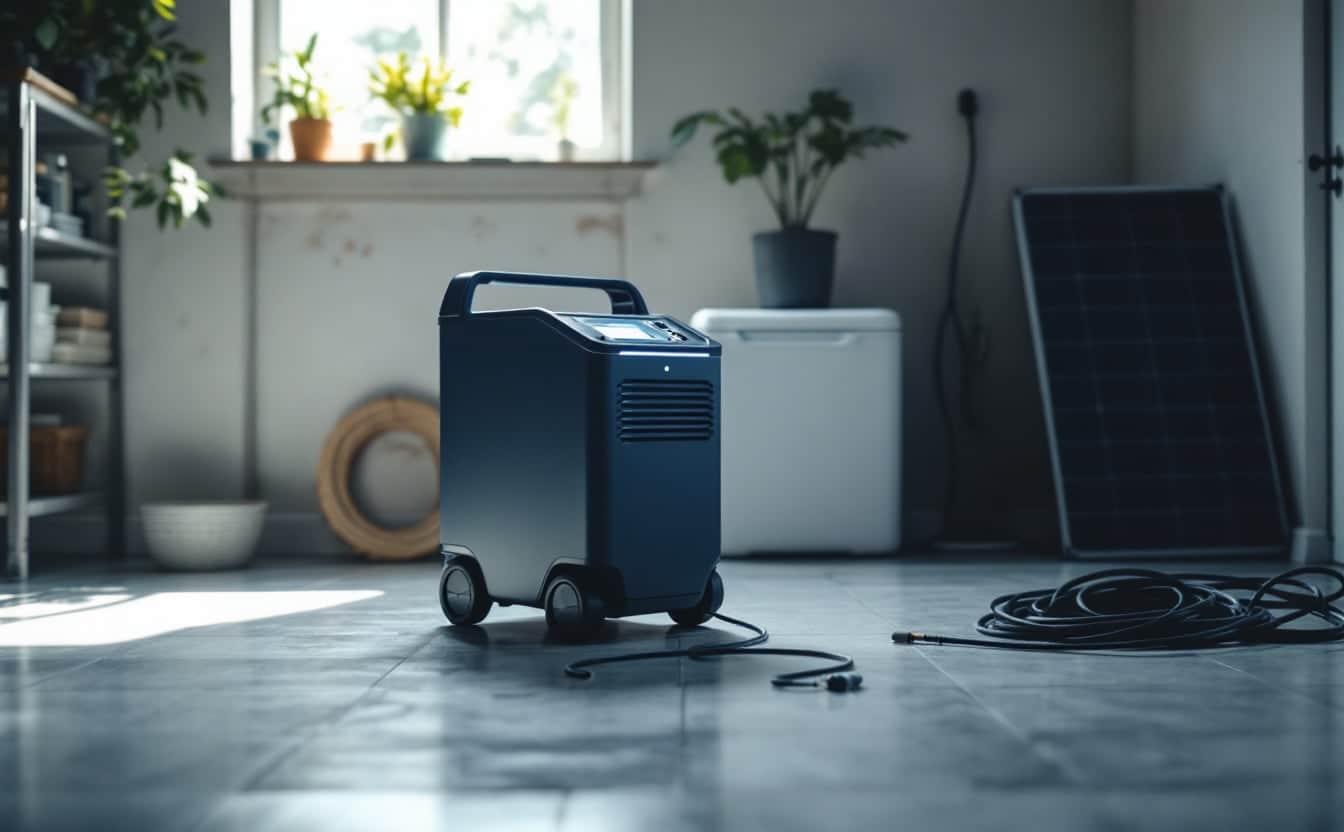
- EcoFlow DELTA and RIVER stationsPower station, expandableGo to EcoFlow
- BLUETTI AC180 and AC seriesPower station, directGo to BLUETTI
- UGREEN 145W 25000mAh Power Bank25,000 mAh, 145 WGo to UGREEN
Pipes, stock and people when the heat is off overnight
Exposure. A heating outage rarely stays a heating outage. On a cold night the building loses heat steadily, and the first things to suffer are the pipes in exterior walls, unheated back rooms and crawl spaces. Stock that can't freeze sits in the same cold.
Impact. A frozen and split pipe can turn a day-long heating problem into a week of water cleanup, flooring work and insurance paperwork. For a business that stores temperature-sensitive goods, the loss can be larger than the repair. For people, the risk is cold exposure, and in a home it is also the temptation to use the wrong appliance to stay warm.
Control. Know where your main water shut-off is and make sure more than one person can reach it. Keep a short list of what in the building is temperature-sensitive and where it would go if the building cooled down. Install carbon monoxide alarms where the manufacturer recommends and test them; never use outdoor equipment such as grills or generators indoors. Anything involving the gas supply, venting or the furnace itself is work for a trained professional, not a weekend project.
Test. Run a ten-minute tabletop exercise, which simply means talking a scenario through around a table: "It is 5 a.m. in a cold snap and the building is at outdoor temperature. Who finds out, who do they call, and what do we move first?" If nobody knows where the water shut-off is, you have found your first job.
Who notices, and who makes the call
Exposure. In most small organizations the person who discovers the problem is whoever arrives first, and that person is rarely the one who knows the service history, the account details or who has authority to approve a repair. Hours disappear in phone tag.
Impact. Every hour lost to "who do we call?" is an hour the building keeps cooling and an hour later in the technician's queue.
Control. Write a one-page heating contact sheet and keep it somewhere everyone can find it, on paper as well as on a phone, because phones die in cold buildings. A simple sequence works:
- The person who finds the problem confirms it is the heat and not a tripped setting or closed vent, without opening any equipment.
- They call the named owner for facilities, who has the service company's number and the account details.
- The owner calls the heating company, describes the symptoms and asks for a realistic arrival window.
- The owner decides whether to open, open partly or close, and tells staff and customers.
Test. Ask the newest member of staff, or the household member least involved with the house, to find the contact sheet and read the first step aloud. If they can't find it within a minute, move it.
Replacing a system on your schedule, not the weather's
Exposure. Every furnace eventually reaches the point where repairs stop making sense. The risk is not the replacement itself but doing it in an emergency, in the middle of a cold stretch, with limited choice and a building that needs heat today.
Impact. An emergency replacement compresses every decision into a day or two. A planned one lets you compare options, schedule a quiet week and tell staff or family what to expect.
Control. When a technician tells you a system is near the end of its life, take that as a project trigger, not a warning to ignore. Ask for an honest assessment, discuss whether a replacement furnace alone is right or whether adding a mini split for key rooms would give you more resilience, and book the work for the shoulder season, when heating demand is low.
| When | What to do | Why it matters |
|---|---|---|
| Now | Find the shut-off, write the contact sheet, test CO alarms | Shortens the first hour of any outage |
| Before the season | Book a professional furnace inspection | Catches problems while parts and schedules are easy |
| Annually | Review the age and condition of the system, plan replacement if advised | Keeps a replacement planned instead of forced |
Test. Once a year, put the age of the heating system and the date of its last professional check in the same place as your other building records. If either is unknown, that gap is the finding.
What to do this quarter
- Book a professional furnace inspection before the first sustained cold, and write its date into your plan.
- Write and post a one-page heating contact sheet, with the water shut-off location on it.
- Walk the building and decide which rooms would need a backup heat source to keep you working, then ask a contractor whether a mini split fits.
A plan that assumes the furnace will start is not a plan, it is a hope with a binder.
Readiness kit
| Category | Pick | Why it is on the list | Link |
|---|---|---|---|
| Power station, expandable | EcoFlow DELTA and RIVER stations | Fast AC recharging, and the larger DELTA units take add-on batteries when a site needs more hours. | Go to EcoFlow |
| Power station, direct | BLUETTI AC180 and AC series | LiFePO4 stations bought from the maker, with solar panel bundles and add-on batteries for longer outages. | Go to BLUETTI |
| Power bank | UGREEN 145W 25000mAh Power Bank | Charges phones and a laptop over USB-C so the station's inverter can stay off. | Go to UGREEN |
Matched to this topic from manufacturer specifications and published reviews; not tested by us. See the Readiness kit